
Steal Or Die Lockers and Vents: What the Entity Hears When You Hide
Steal Or Die lockers and vents from both sides: what the entity hears — breathing, unscrewing — why found hideouts become free kills, and when vents work.
FAQ
Can the entity hear you breathing in a locker in Steal Or Die?
Why do entities check lockers so carefully?
Can the entity hear you open a vent?
Can the entity follow you into a vent?
Should I hide in a locker or a vent?
Every hiding guide tells you the same three words — lockers buy time. Few tell you what the time is for, or what the other side of the door actually hears. This page is the locker deep-dive: every confirmed locker and vent interaction from one long session, watched from both the survivor’s seat and the entity’s, with the quotes left in because they are the evidence. The hiding overview ranks every option in the game; this page is what happens inside the two most popular ones.
What are lockers in Steal Or Die?
Lockers and closets are the game’s built-in hiding spots — enterable furniture scattered through every map, and the hiding choice most survivors make first. The interaction is dead simple: walk up, get in, and the HUD swaps your exit prompt. One recorded survivor spent the final minute and a half of a match sealed inside one, the closet prompt on screen while the exit countdown ran from 0:17.
 Inside the hiding spot: the Leave closet prompt is the only thing on screen besides the timers. See 28:25 in the source video.
What the closet view makes obvious is the psychology. From inside, you can see nothing — the walls go black — so the moment you hear the entity near, your information advantage is gone and your imagination takes over. That is exactly when the discipline matters.
What does the entity hear when you hide?
The game’s scariest audio design decision is that hiding spots are not soundproof. The single most useful quote in the locker record comes from an entity player mid-hunt, standing near a survivor’s hiding spot and talking to them through the walls: “chill out with the breathing.”
Read that as a mechanic, not banter. The game transmits enough of a hiding player’s breathing that a hunter standing outside could hear it and call it. The official hiding artwork’s own warning — DON’T MOVE: DON’T BREATHE — turns out to be a literal instruction. Practically: get in quietly, then stop generating noise. Mute your mic (the game listens to that too), stop moving, and accept that the locker’s protection is the entity’s uncertainty, not its locked door.
Why do checked lockers become free kills?
Because the entity sweeps, and the sweep is thorough. The same session shows the hunter walking straight to hiding spots after a kill, checking them one by one — and the commentary explains the economics from his side of the hunt:
“Who’s hiding in these? Nobody. Okay. Yeah, those are like free kills. Anyone that goes in there.”
Minutes earlier, he had found a survivor fully hidden in a room and eliminated them on the spot — the moment the camera catches the found-hider’s reality:
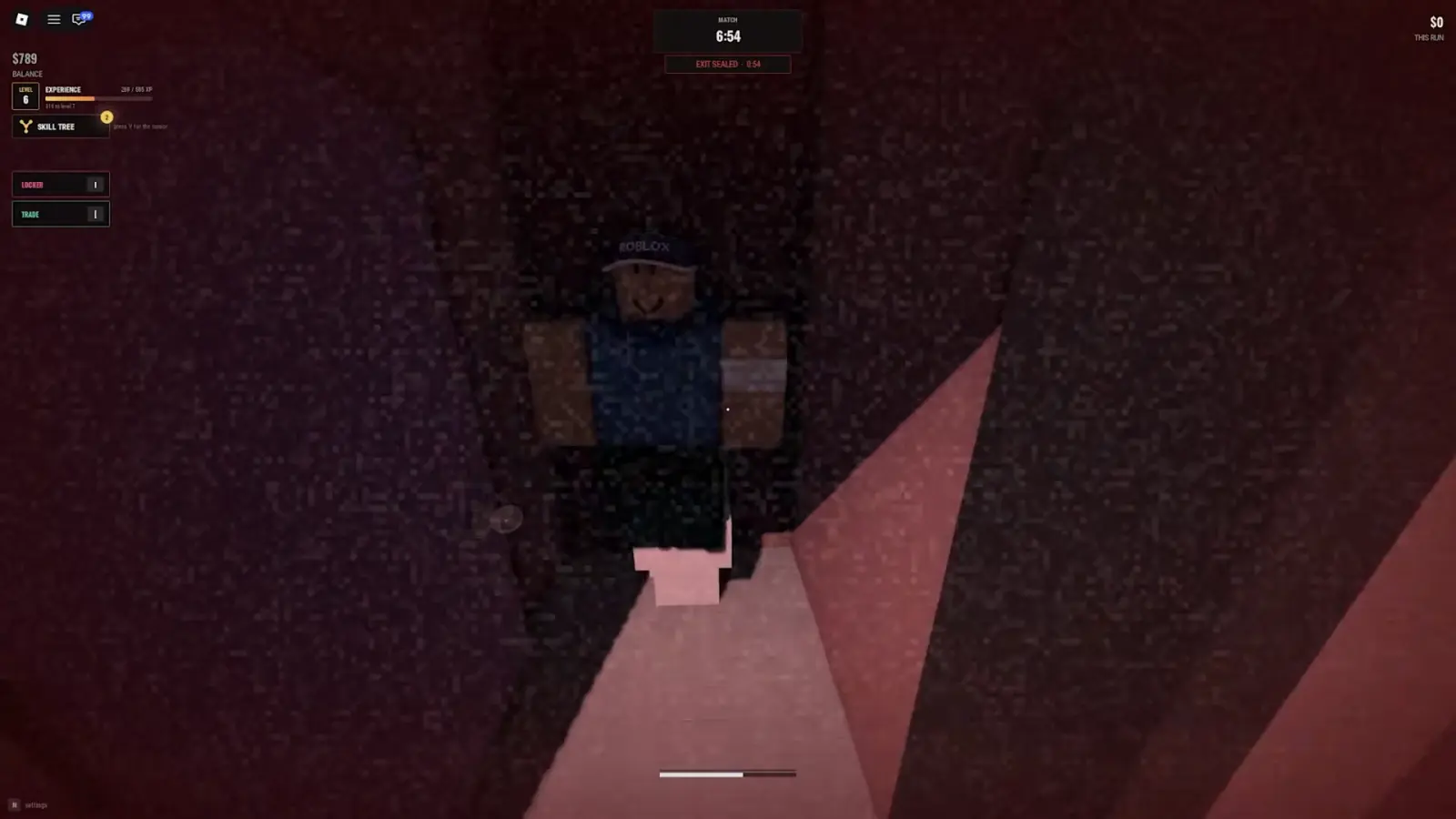 Found means finished: the hunter closes distance on a survivor who committed to a hiding spot with the exit still sealed. See 54:35 in the source video.
The rule that makes this a trap rather than a strategy: nothing you are carrying banks until you physically leave. Die in a locker gamble and the run pays zero — the same payout rules the value list tracks price by price. Hiding is a pause button for repositioning, never a place to wait out the clock unless you are genuinely the last survivor and the door is closer to you than the hunter.
Are vents better than lockers?
Vents play by different rules, and the session documents both sides. The good news first: a vent escape is the one hiding move that has actually ended a chase on camera. A survivor dove in mid-pursuit, and the entity — on screen, alone, sweeping supermarket aisles in the wrong direction — gave up the hunt with a frustrated “you went in the vent” and went looking for a different target.
The bad news is that the vent announces itself. Seconds after that same hunter heard a cover being unscrewed somewhere in his building, the camera shows him hunting the sound in the back rooms:
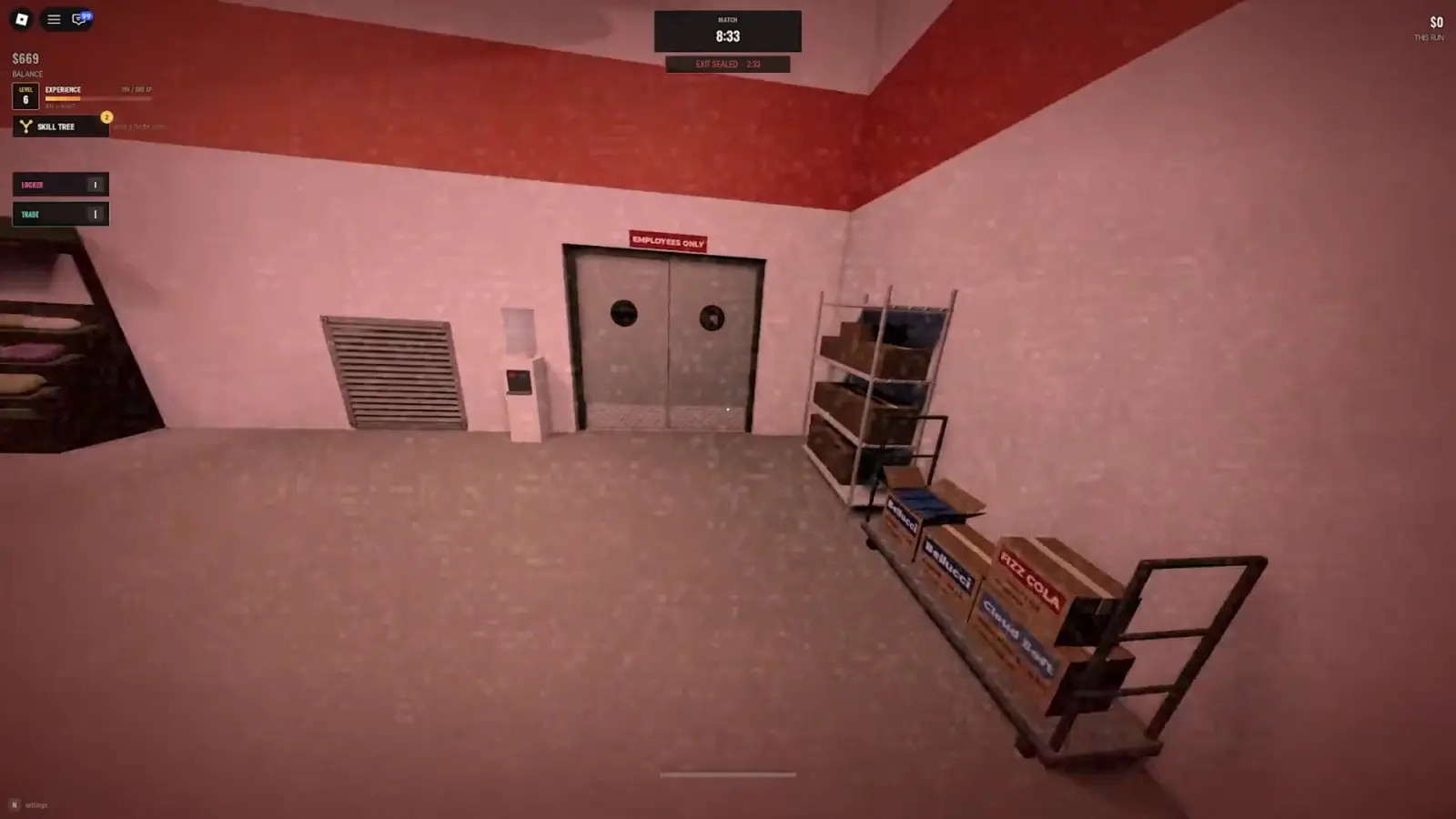 The unscrew is loud: the hunter works toward a wall vent grille after announcing he heard somebody opening one. See 52:56 in the source video.
Three facts assemble into a plan. The vent needs a screwdriver, which cannot be sold, so carry one every run. The unscrewing is audible, so open vents early — during the quiet first minute, never as the entity closes in. And whether the entity can follow you inside remains officially unknown; nobody has filmed it, which is the strongest record any hiding option in this game can claim, but “never seen” is not “impossible.”
So when should you actually hide?
The session’s closing meta-observation is the honest summary: survivors who hide all match keep their stamina topped up while the hunter burns theirs, which is why pure hiders are so annoying to hunt — and why they also bank nothing. Hide with a purpose:
- Before the chase — break line of sight first, then slip in unseen. A locker entered in view is a locker the entity opens.
- To reset, not to camp — let the hunter pass, then move. Distance is the real prize; the locker just sells you the time to build it.
- The vent as the emergency exit — when the chase is already on and the screwdriver is in hand, a quiet early-opened vent beats any sprint.
And when you do bank a haul, spend it on things that survive the next match — the between-match economy from upgrades to trading is covered in the cases guide and the trading guide. For how each named hunter ranks as a locker-checker, the tier list compares them, and the entity files on The Locust and The Hollow carry the hiding-specific counterplay.
Sources and footage credit
Every quote and screenshot on this page comes from FusionZGamer’s long Steal Or Die session (watch the source video on YouTube), which happens to include a full match from the entity’s side of the hunt — the breathing callout, the unscrew reaction, and the free-kills sweep are all his microphone. Cross-checked against the hiding facts already established across this wiki. Entity-in-vent remains unverified as of October 22, 2026.

STEAL OR DIE.. (FusionZGamer full session including the entity-side locker hunt)
Related Articles
bosses
The Rictus in Steal Or Die: Unlock Cost & Hunt Guide
The Rictus costs $4,899 in Steal Or Die's shop. See its exact card, selection rules, attack prompt, and a full player hunt before spending your cash.
guides
Steal Or Die: How to Play as an Entity and Pick a Monster
Learn how to play as an entity in Steal Or Die: choose a monster, vote ENTITY: PLAYER, and understand why buying 2x chance never guarantees the role.
guides
Steal Or Die Survivor Upgrades: Backpack, Speed & Stamina
Spend banked cash on Steal Or Die survivor upgrades. Compare Backpack, Sprint Speed and Stamina, check filmed prices, and separate them from skill points.
Was this helpful?
Thanks for the feedback!